

Les Cordons Bleus
Rethinking a Marseille cooking school's website, from UX audit to coded prototype.
At a glance
- Context
- A cooking school in Marseille's Old Port, founded in 2003. It wants to modernise its website, simplify booking, build loyalty and add an AI feature.
- My role
- Product Designer UX/UI, from audit to coded prototype
- Year
- 2026
Fictional brief provided by the course: the school, its data and its customers are made up.
01 · Understand
The brief: a dated website, a booking flow that drives people away, and the wish for an AI feature.
- €25,000 budget
- 4 to 6 months
- €3,000 maintenance per year
My approach, in 6 steps
01 Silent audit
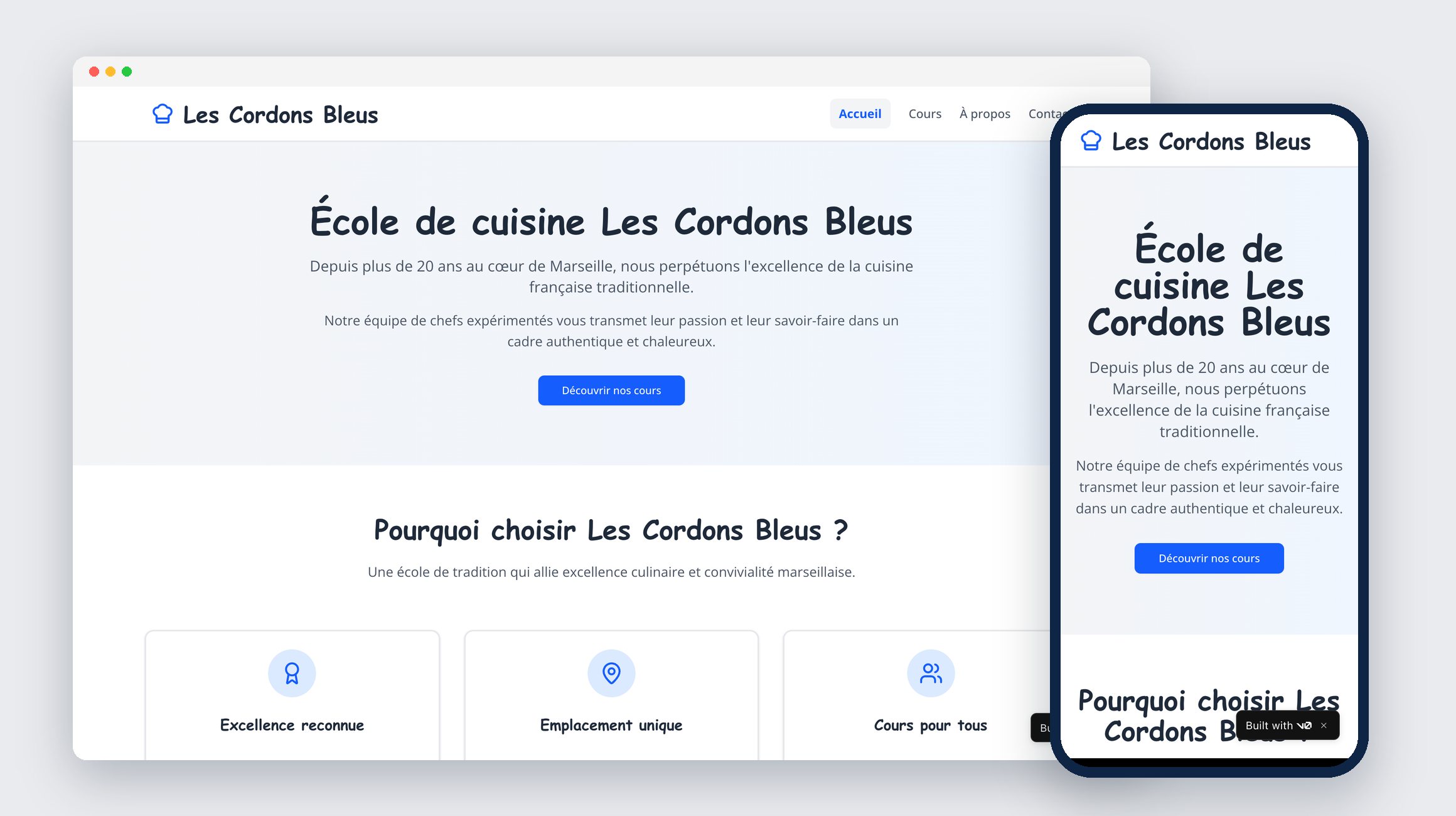
Before any contact with the client, I audited the existing website, on desktop and mobile, so that I would only ask questions whose answers weren't already visible.
- Blocking No menu on mobile The About page can't be reached there.
- Major Not a single photo In a field as sensory as food: no dish, no chef, no school.
- Major Two contradicting messages An online booking flow on one side, a manual email process on the other.
- Major Trust undermined Inconsistent figures between pages (5 or 20 years in business, 500 or 5,000 students), a phone number left as “XX XX”, no customer reviews.
- Compliance Broken legal links And no terms and conditions checkbox at payment.
What works
A clear 5-step booking flow, where you can always go back.
02 Client questionnaire
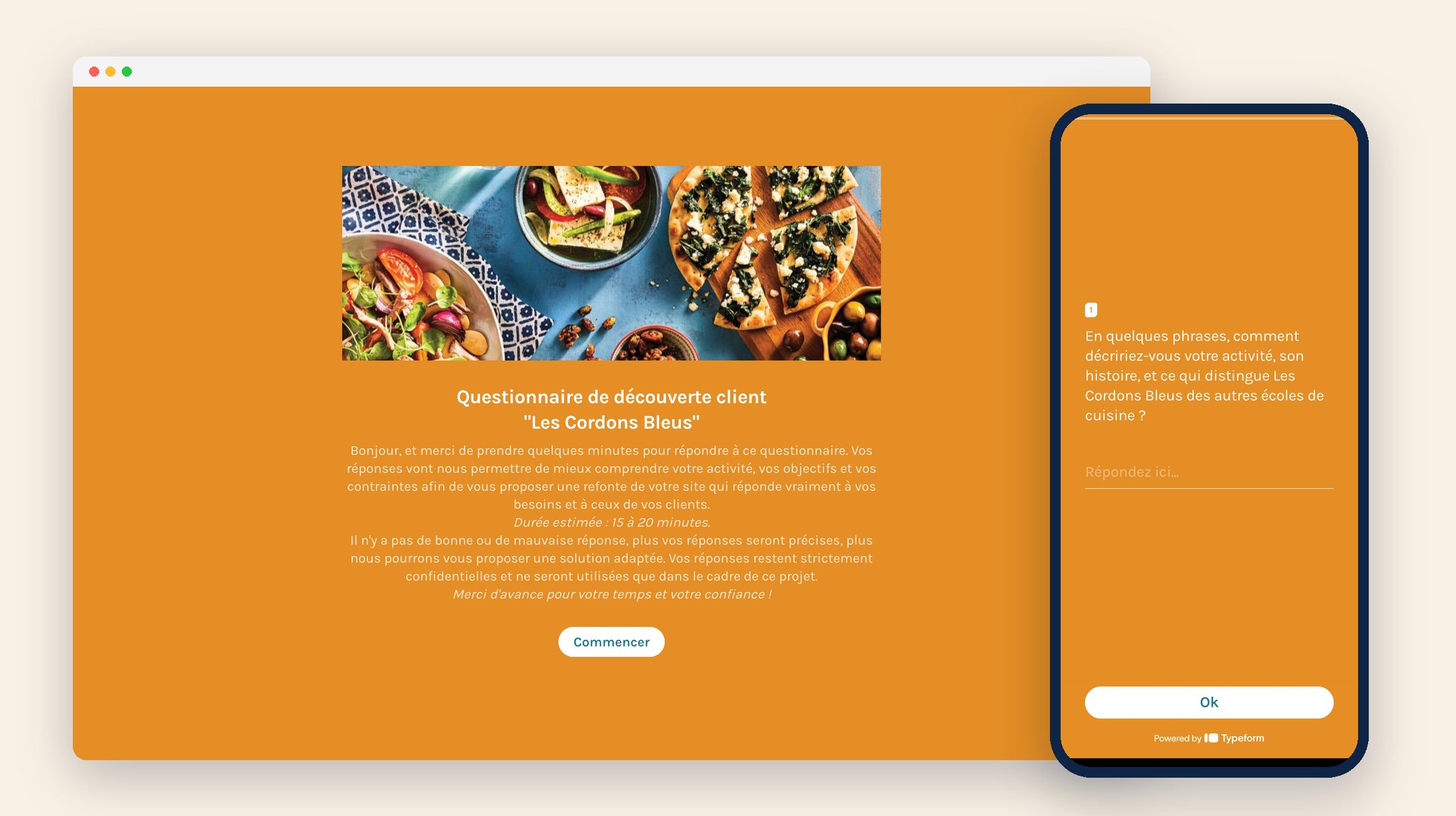
A 20-question discovery questionnaire, built from the audit: no question whose answer was already on the site. Varied formats (open questions, scales, rankings, multiple choice) to get answers I could act on.
- The school and its customers
- The current website
- Goals and success
- Inspirations
- Budget, team and technical constraints
- Image and tone
“If this project is a success in 12 months, what will have concretely changed for your business?”
“Is there anything you absolutely don't want to see on your future website?”
03 Data analysis
I cross-referenced 10 customer testimonials, Google Analytics, the CRM, support tickets and interviews with the team. Three critical problems stand out.
Complex and unreliable booking
Too many steps and uncertain availability: many visitors give up, especially on mobile.
Too little information and visual proof
The Contact page accounts for 32% of page views.
No experience before or after the class
Students ask for the recipes and want to review the techniques.
The limits of my research
Only 10 testimonials out of 97, selected by the client; an analysis period from January to March, outside the peak season (October to December); two measures of time spent on the site that don't match.
04 Personas
Built with the help of AI from the testimonials.
Estelle, 28
Food blogger. “Looking for quick, simple booking.”

Nicolas, 45
Architect. Organises workshops for his colleagues, wants to preview and customise the menus.

Claire, 32
Parent. Wants to extend the experience at home with her daughter.
05 Benchmark
- L'Atelier des Chefs, the national leader
- Chefsquare, the specialist for companies and gift cards
- La Villa des Chefs, the regional competitor
Extend the experience
After the workshops, thanks to AI: no competitor does it.
A segmented journey
With a Companies and groups offer.
Marseille's identity
Make it a real differentiator.
06 Service blueprint
The whole experience, from first contact to follow-up after the class, including the school's internal actions.
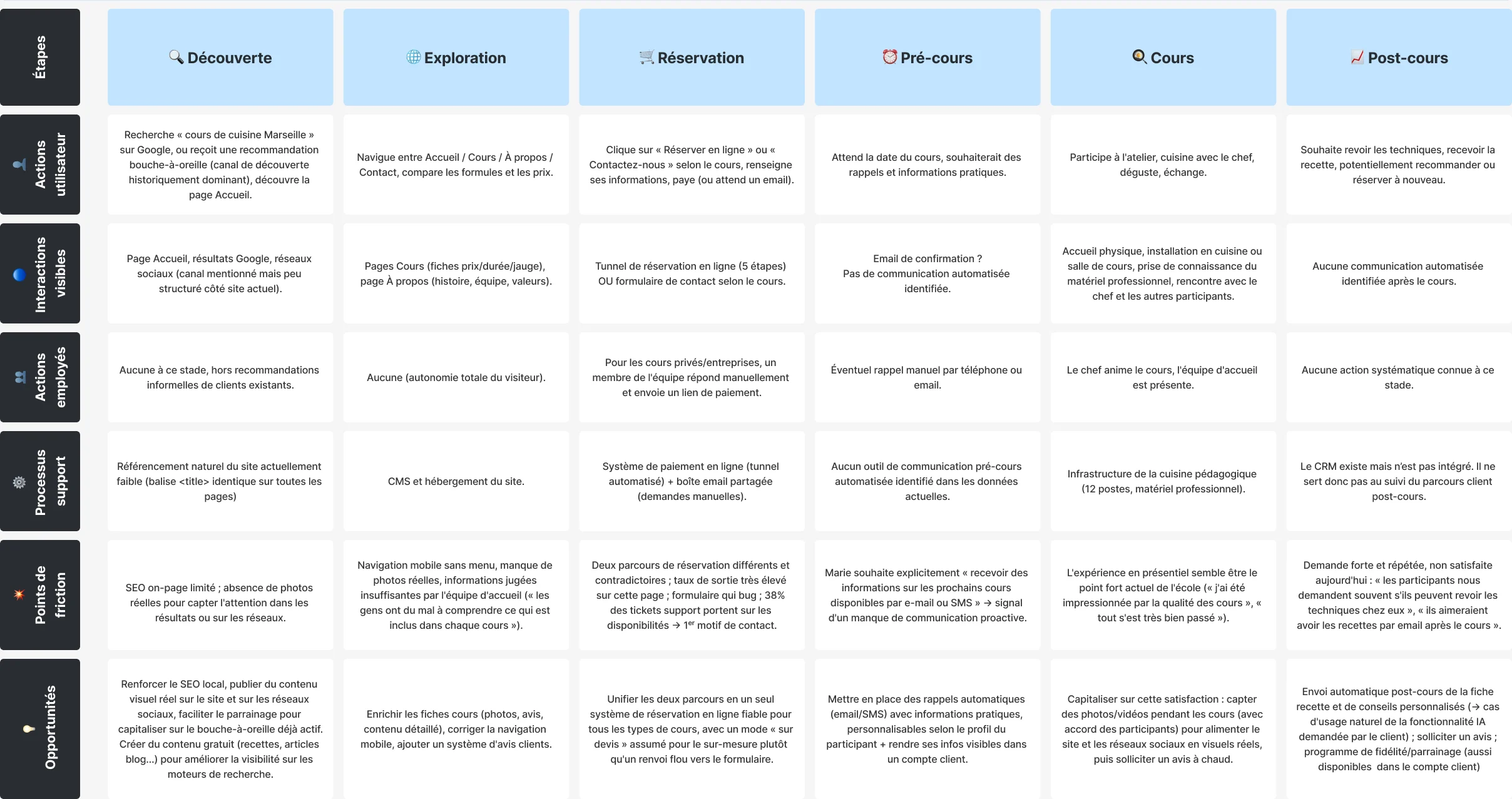
What we found
45%
exit rate on the booking page
4%
conversion on mobile (9% on desktop)
38%
of support requests are about availability
02 · Design
Prioritise with the client, prototype with AI, audit that prototype, then build the identity, the design system and the coded website.
-
01
Prioritise
A solution ranked P0 to P2, within budget, and a simpler site structure.
-
02
Prototype with AI
A first prototype generated with Figma Make, then audited page by page.
-
03
Identity and design system
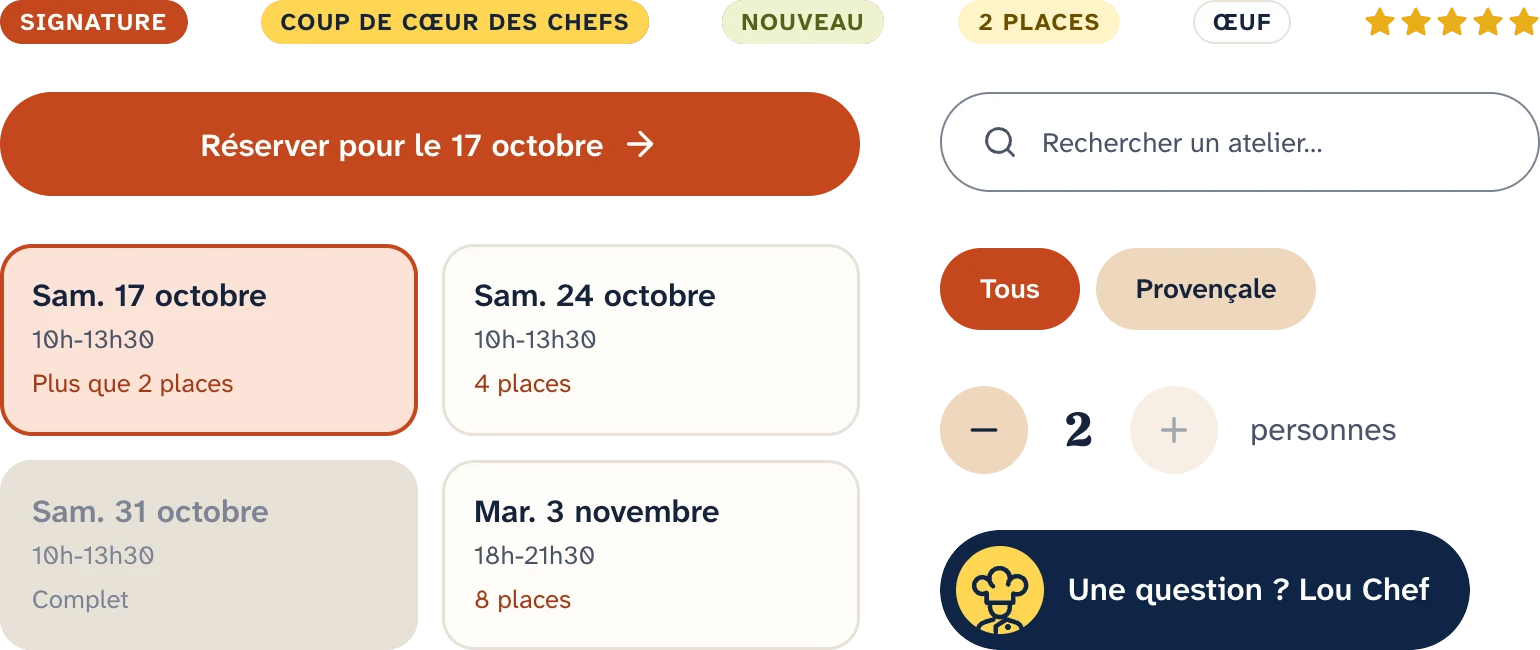
Colour and typography reworked, 32 documented components.
-
04
Design, then code
8 pages for desktop and mobile, then a coded website where everything works.
03 · A new identity
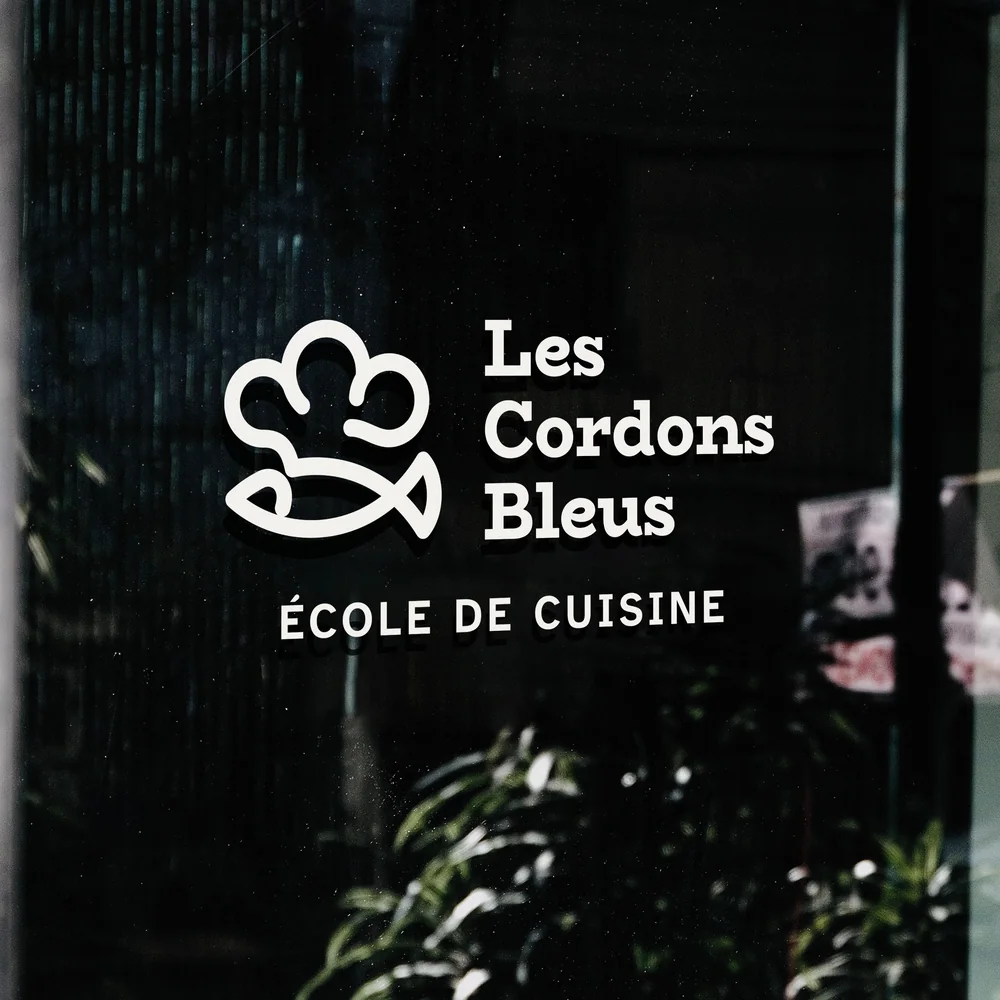
A “tomato in action” palette: tomato to act, midnight blue and cobalt for trust, lemon for accents. A new logo: the chef's hat that turns into a fish, Marseille and cooking in a single line.

Colours
Primary
- Tomato
- Midnight
- Cobalt
- Lemon
Secondary
- Olive
- Apricot
- Turquoise
- Teal
- Mustard
- Sky
- Sand
- Deep sand
Typefaces
- Calistoga Headings
- Atkinson Hyperlegible Next Body text, designed for legibility
- Kalam Small handwritten notes
Components
04 · The website
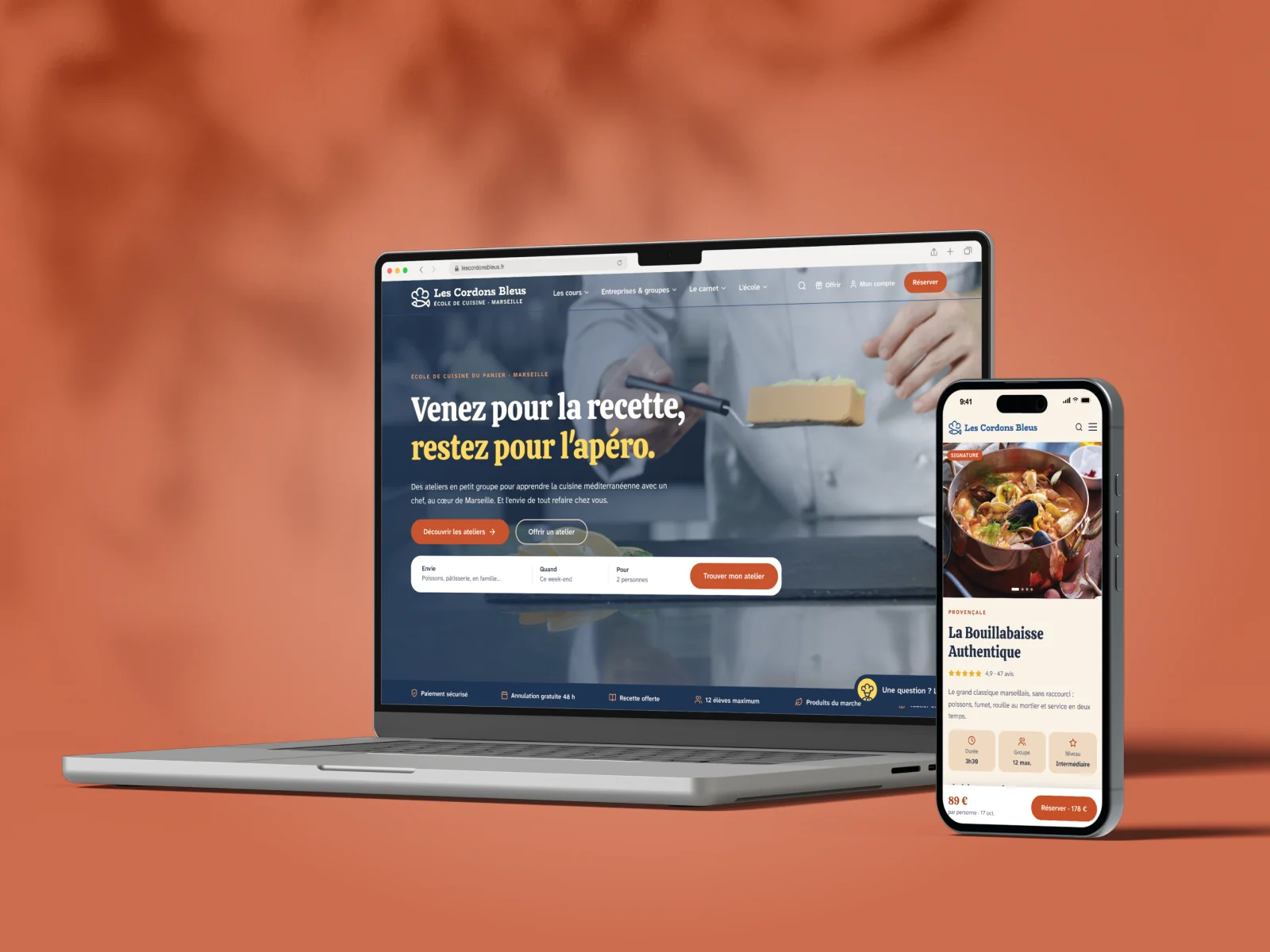
Eight coded pages, from the catalogue to payment, where every interaction really works, on desktop and mobile alike. Booking goes from 5 steps to 3.
-
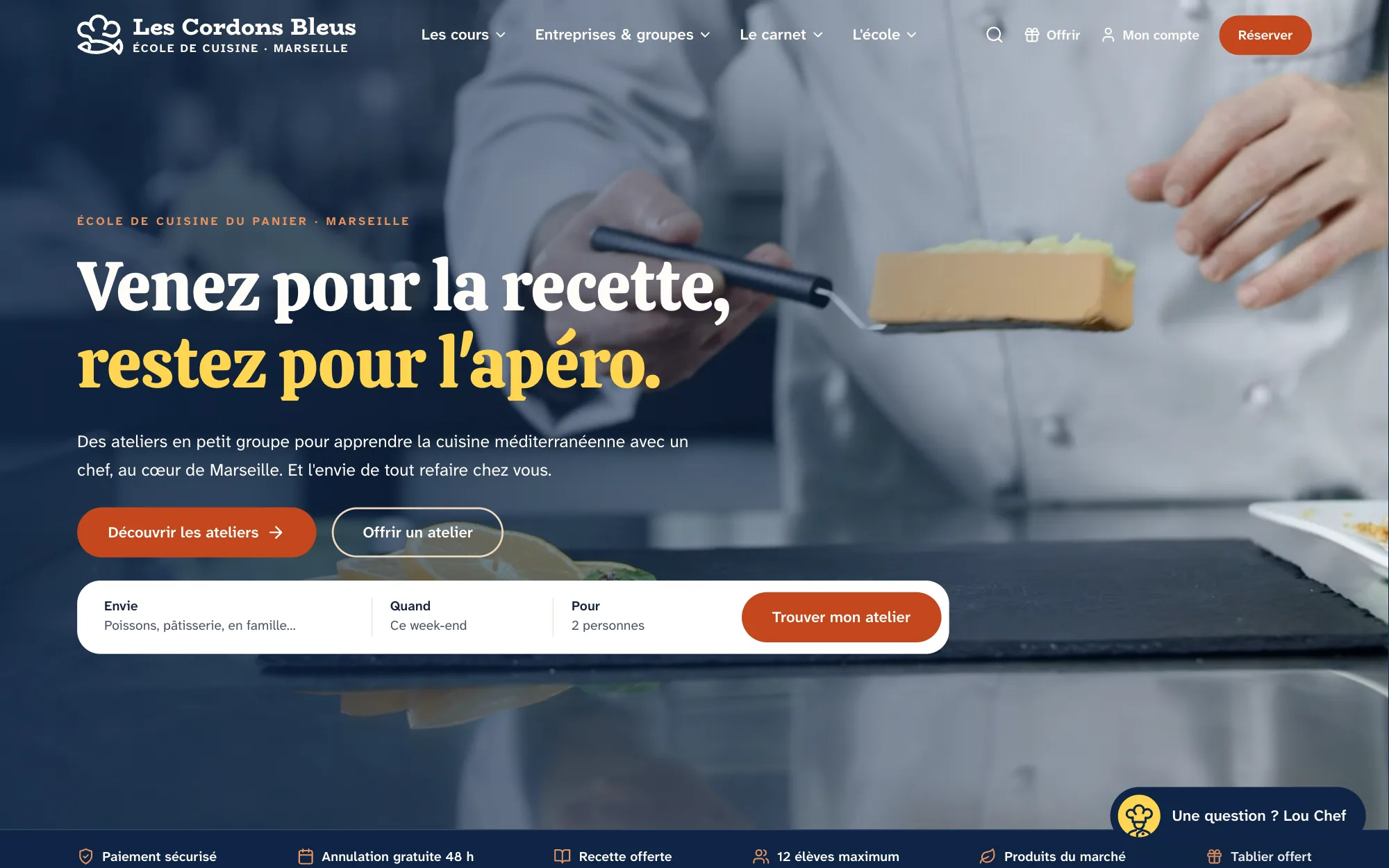
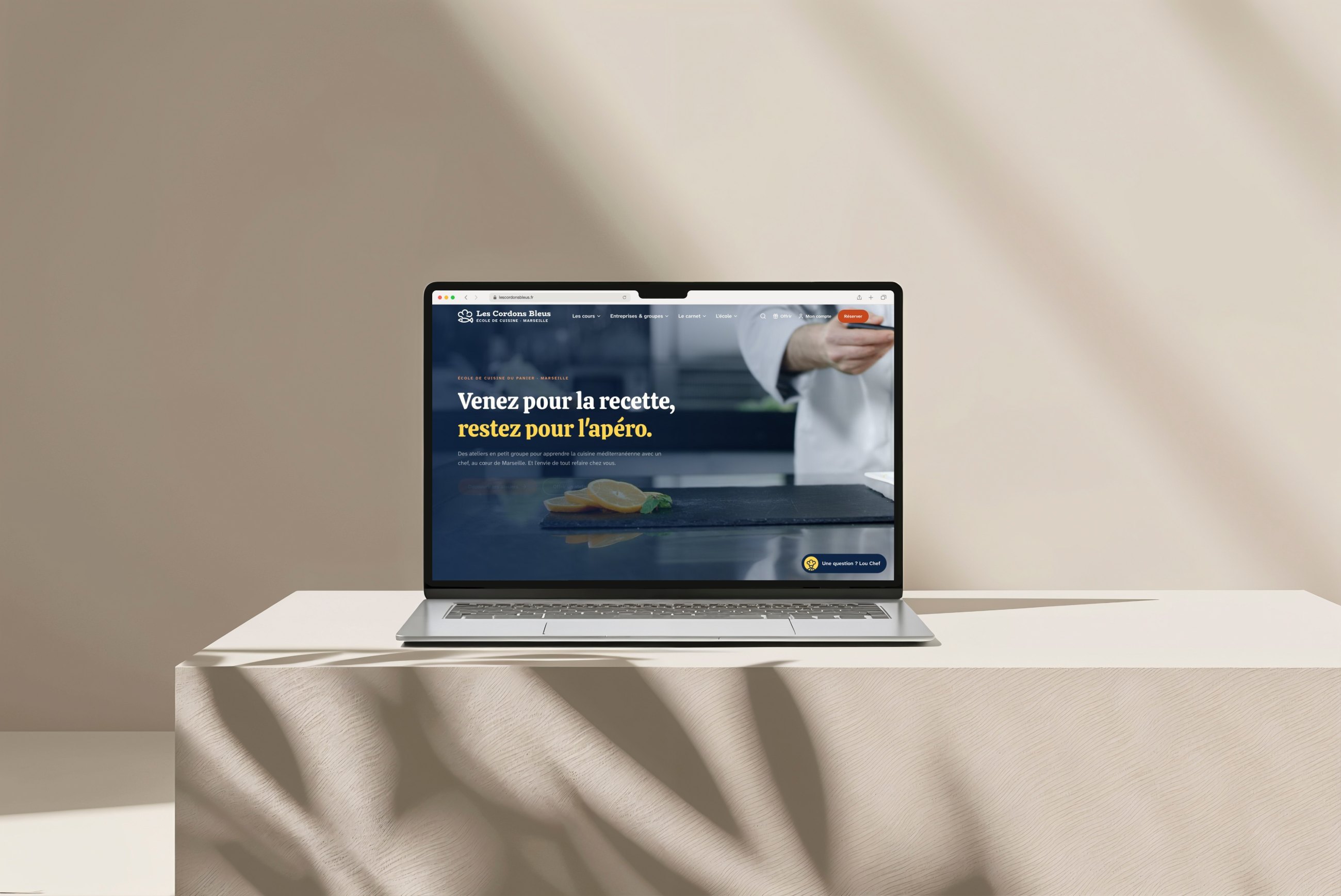
Home: the school's promise and a quick search. -
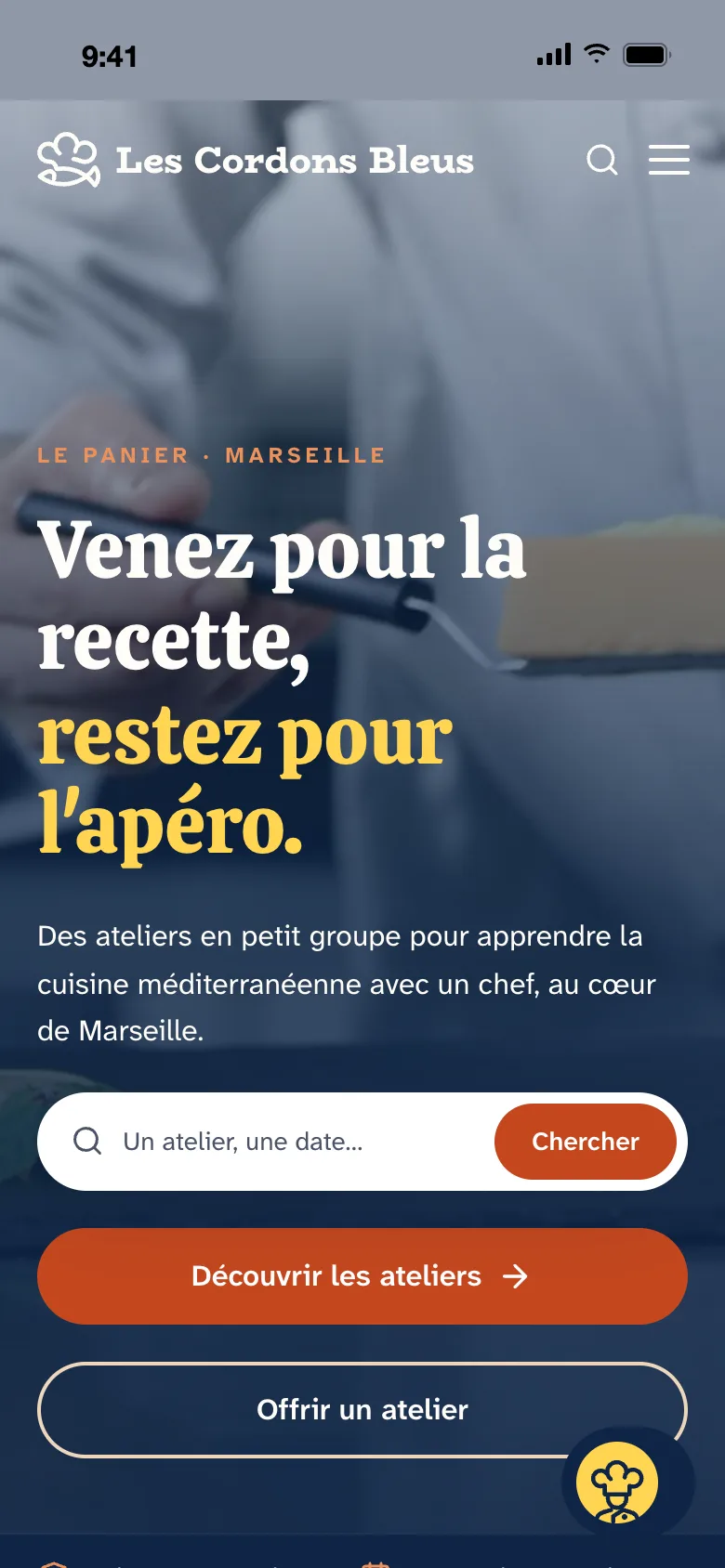
Home, on mobile. -
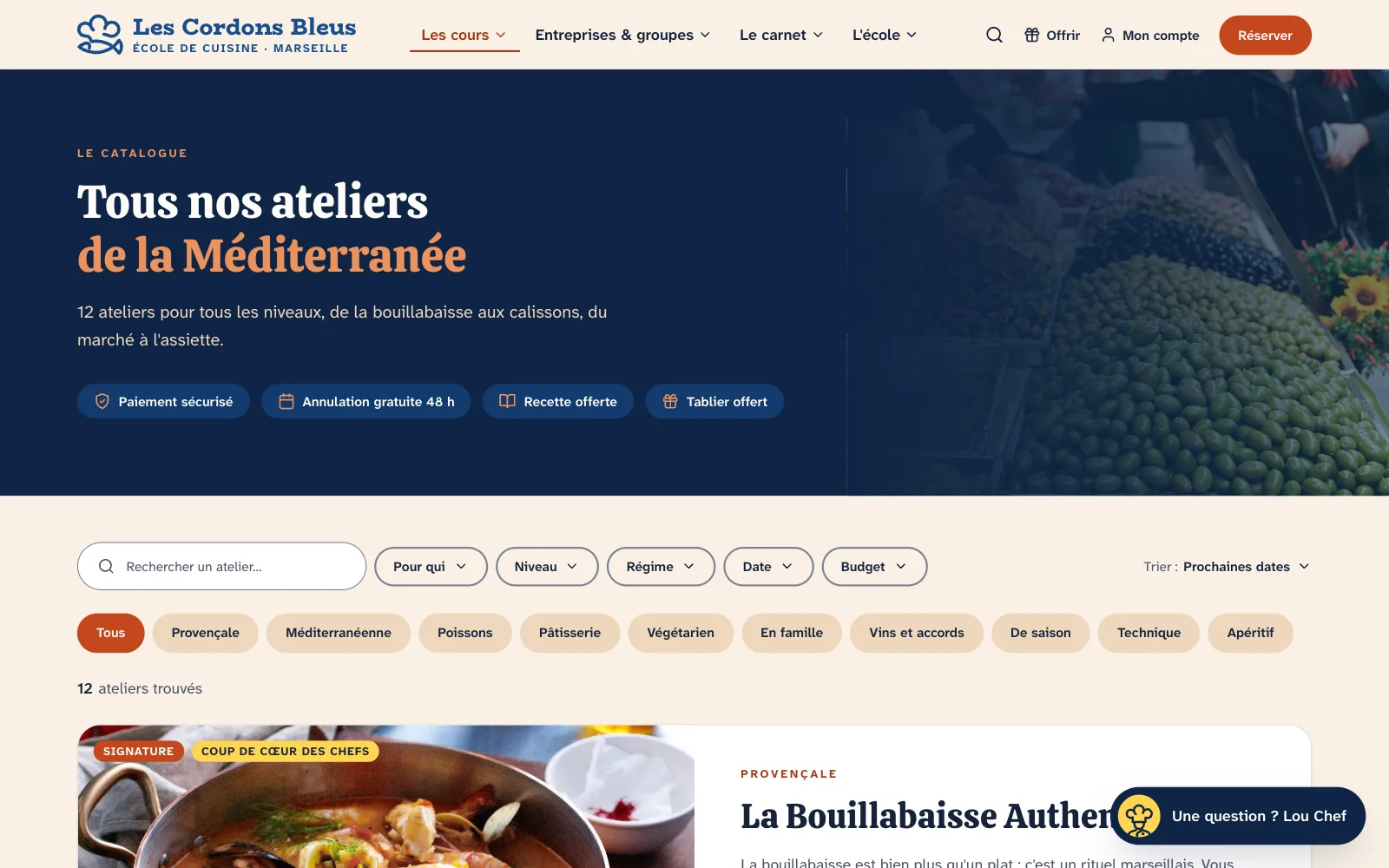
The catalogue: filters by theme, level, diet, date and budget. -
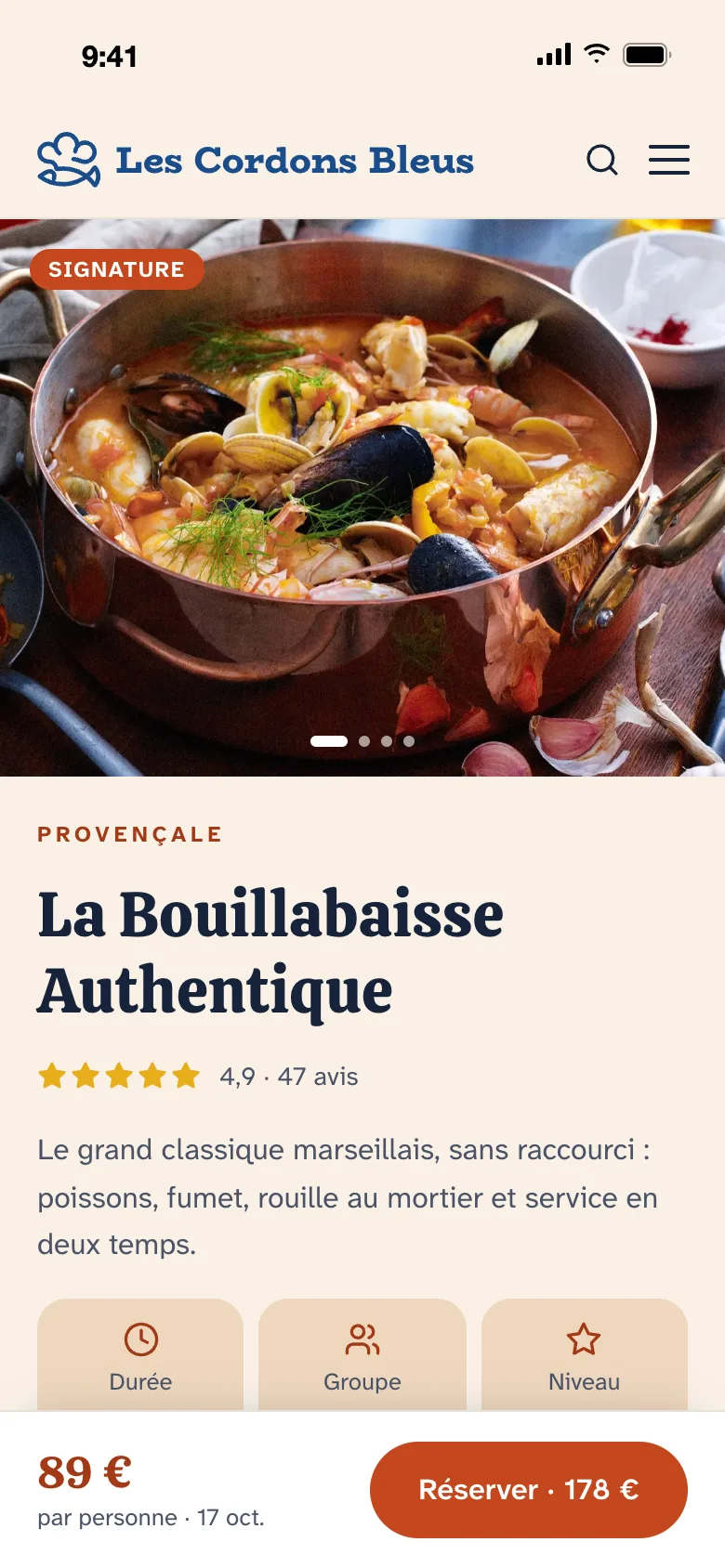
The class page: booking within thumb's reach. -
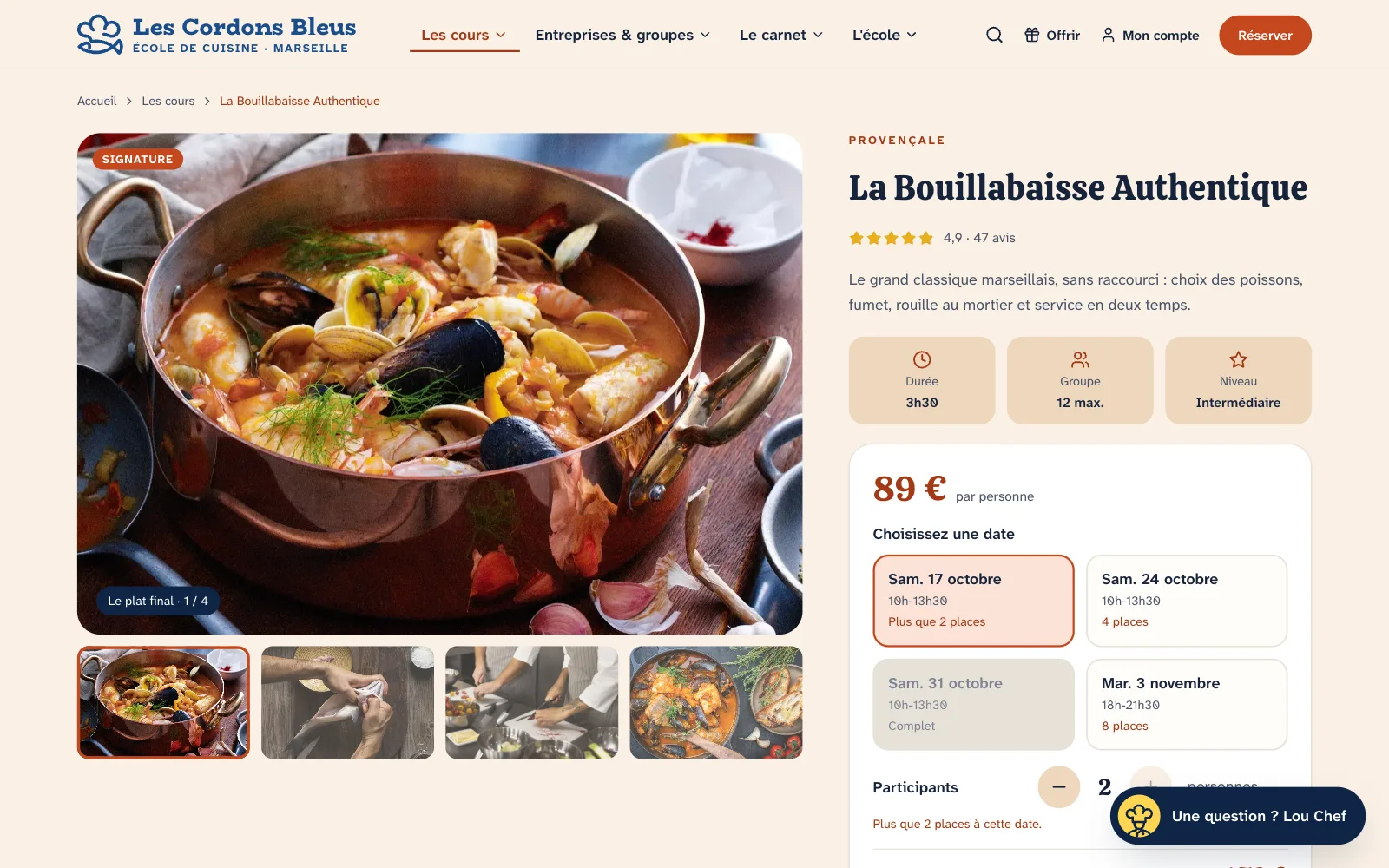
The class page: date and number of people are chosen on the page, and the total is calculated. -
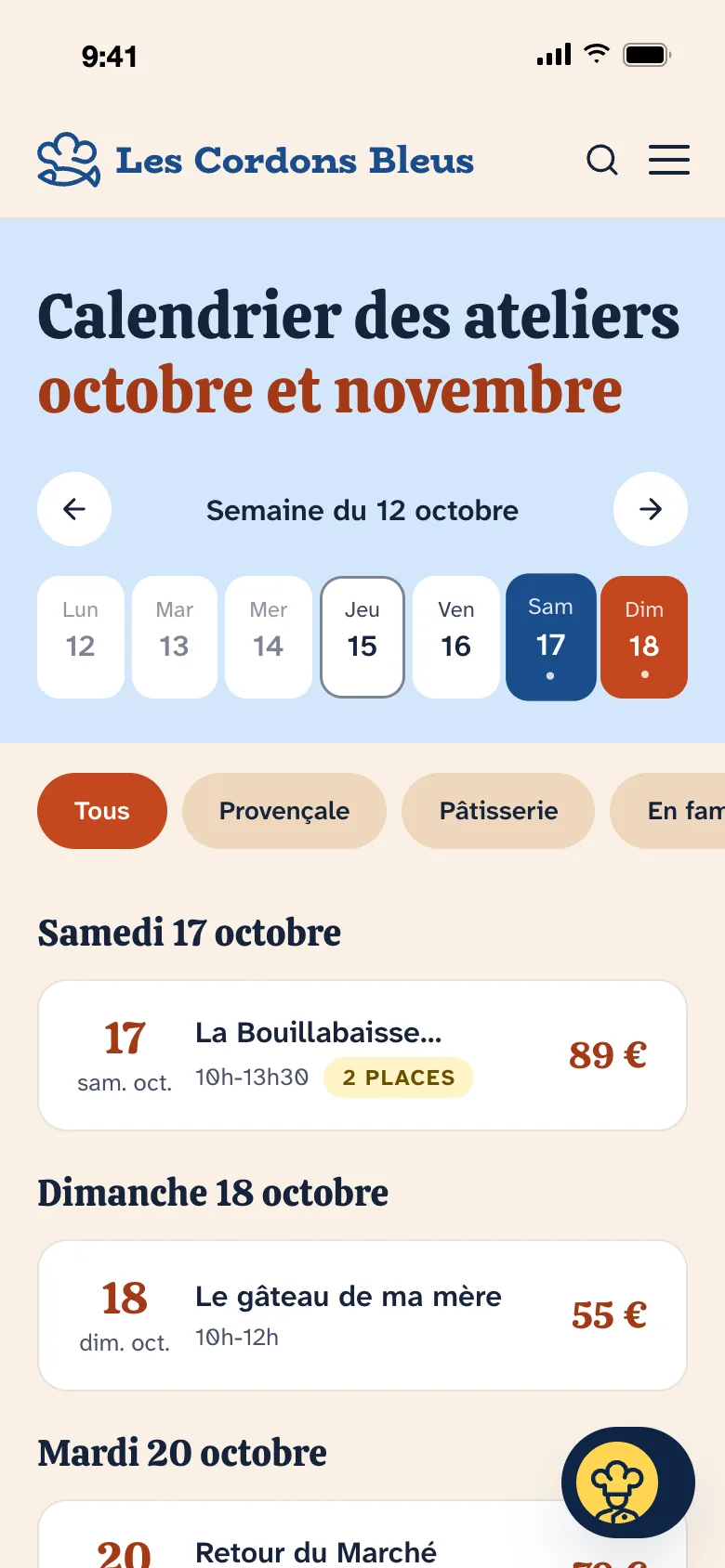
The calendar, day by day. -
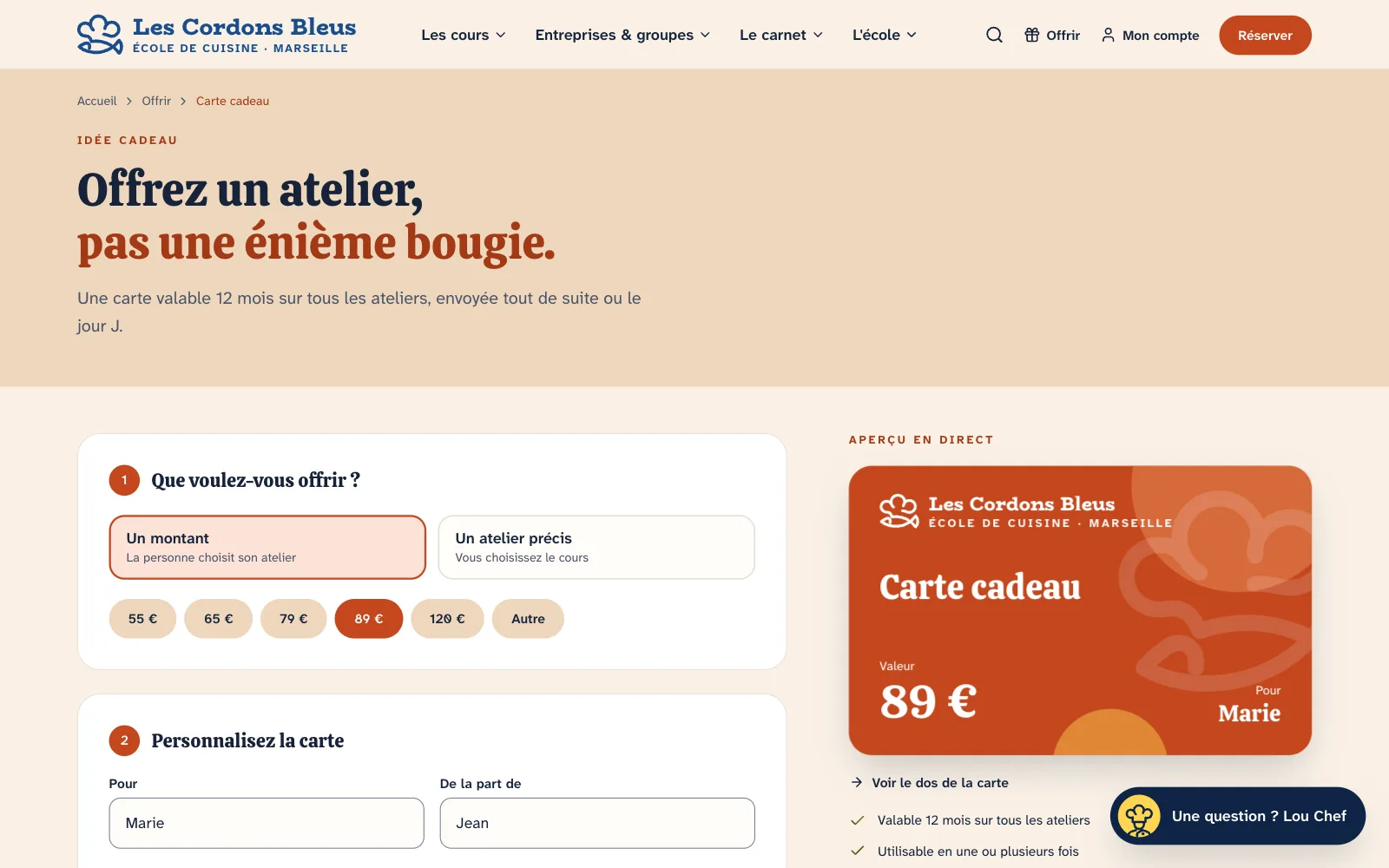
Gifts: a single journey, and a card that updates as you type. -
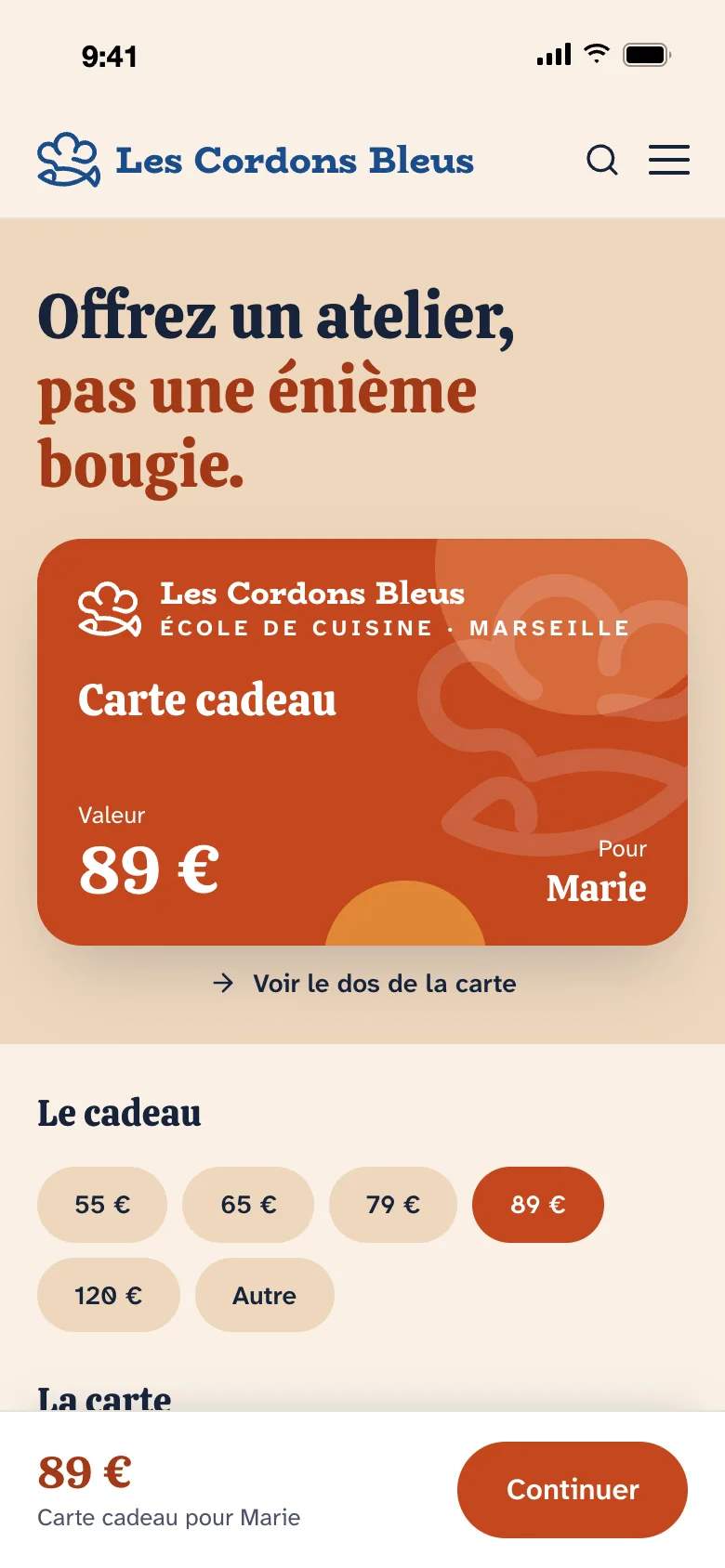
Gifts, on mobile.
05 · Lou Chef, the school's assistant
AI extends the chefs' experience, it doesn't replace them. Lou Chef helps you find a workshop, a free date, a gift idea or practical information, then meets the student after the class with the recipe adapted to their table.
- Before the class Choose a workshop, prepare the visit, ask questions.
- During Lou Chef steps back: people stay in charge.
- After Find your recipes, adjust quantities, create variations for diets or allergies.
06 · Measure, then iterate
The work doesn't stop at the prototype. Once the website is live, we measure its effect on the brief's targets, test with real students, then adjust.
Targets set in the brief, at 12 months
11%
overall conversion (7% today)
20%
exit rate on booking (45%)
8%
mobile conversion (4%)
-
Measure
Conversion, drop-offs, support requests.
-
Test
With real students, on desktop and mobile.
-
Iterate
Adjust the screens, then measure again.
What I take away
My first website designed with AI, in two stages: a prototype generated with Figma Make from my prompts, then, after auditing it, a design system and a coded website where every interaction really works. AI is fast; it's the critical eye, on the brief, on contrast and on a look that felt too “generated”, that makes the quality.
Cross-referencing sources (testimonials, data, support, team) makes decisions solid. And stating the limits of your research clearly makes them credible.
Want to get in touch?
I'm looking for my next permanent role, and I'm also open to a fixed-term contract, an exciting project or a coffee to talk shop. Drop me a line!